
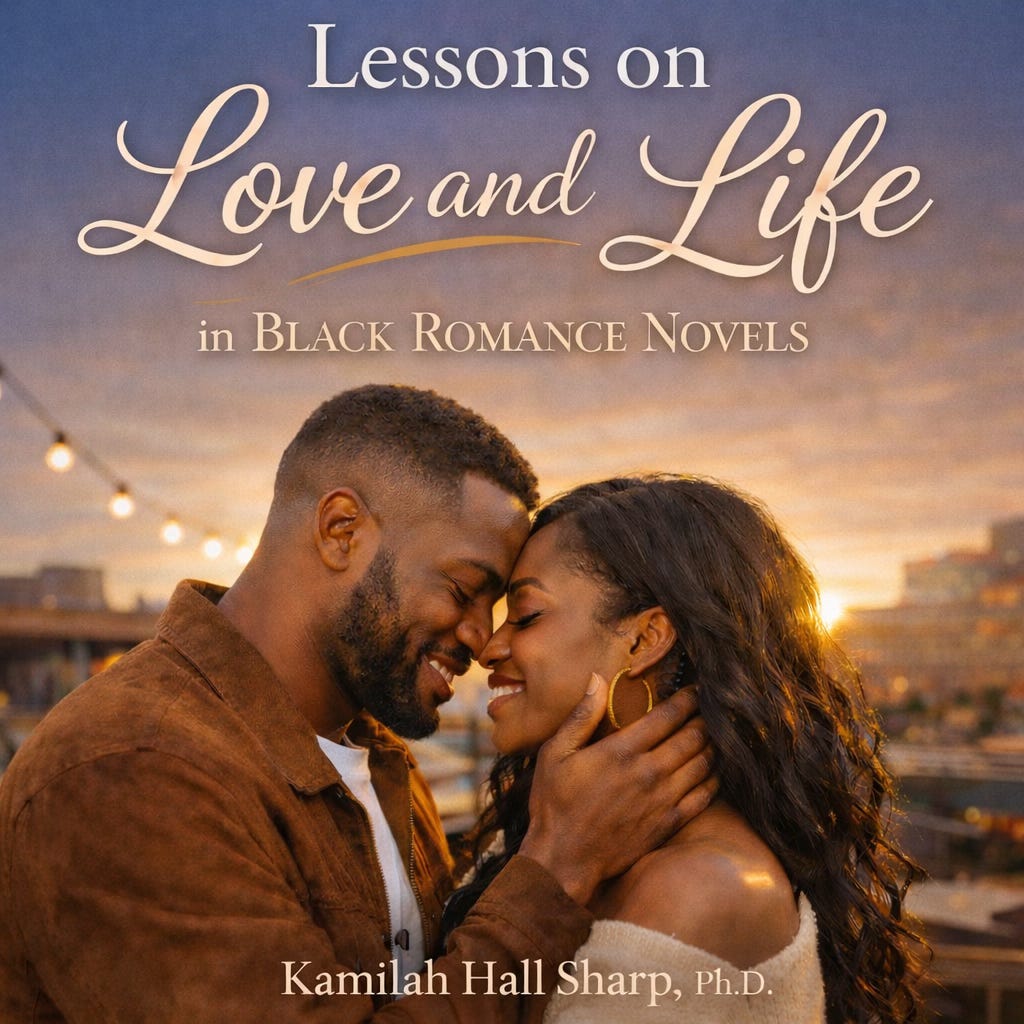
Graduate school is demanding and requires a lot of reading. I love reading, but there were many days early in the program when I was reading things I did not want to read, things that felt heavy or were just plain boring. When I read books for school or church, I take notes with the possibility of using what I’ve read in a paper or sermon. It was all part of the process. Because I had a 45-minute commute to campus, I started listening to audiobooks in the car to pass the time. I decided to listen to books I actually wanted to engage, books I could simply listen and enjoy.
Initially, I listened to a lot of autobiographies and memoirs. The ones read by the author are my favorite. There is something about hearing people tell their own stories in their own voices that gives the narrative a different feel. Jenifer Lewis’s Mother of Black Hollywood is, hands down, my favorite audiobook. She performs her life as only she could. Trevor Noah’s Born a Crime is a close second. I also listened to novels because I wanted to be pulled into a good story, something that could momentarily take me away from our reality.
Last year, during my social media fast, I began listening to Black romance novels. The first book I listened to was The Secret World of Maggie Gray by Granger. It is a Harry Potter-style story set at an HBCU that includes Black love. From there, I found Spilling the Tea by Brenda Jackson and was immediately intrigued by her writing and the ways she narrated Black love with some good plot twists. After working my way through several of her books, I started checking Goodreads to see what others were reading and saying about them, and I kept listening. In 2025, I listened to over 100 Black romance novels.
I began with stories set in small towns, and then, somewhat reluctantly, I listened to Maybe for the Summer by Aubreé Pynn. I was hesitant because the story is centered on a rapper. While I love hip hop, I did not think I would enjoy the book. I was wrong. This became my favorite book of 2025. The story of Julius, a rapper trying to do better, stay clean and sober, face his trauma, while falling in love, had me completely hooked. He was deeply in love with Day and made it unmistakably clear. I listened to the book more than once, which is something I rarely do, but it was that good. When I reflected on why the story stayed with me, I realized it was because this was the first time I encountered a Black male character in these novels who went to therapy. This is something I would love to see more of in real life. I have since seen this more often, but this was my first experience. It was profoundly moving.
After that, I began listening to a wide range of Black novels from athletes, musicians, millionaires, people struggling, your everyday person, drug dealers, and even comical murderers. The range of stories was deeply meaningful to witness. As I listened, I laughed, cried, cussed, and gasped, moving through a wide spectrum of emotions. I also could not help but notice that nearly every main male character (MMC) was crazy, crazy in love, but unhinged nonetheless. Many reviews referred to these characters as “BAE,” celebrating their behavior.
At first, I was thrown off. I found myself wondering why thousands of women, myself included, were drawn to these characters with their unhinged behavior. Eventually, I realized it was because many Black women have not experienced being protected and cared for in the ways these women are in the stories. I often read phrases like “he didn’t play about her” or “he stood on business for her.” In this country, many of us have never experienced that kind of protection. Instead of someone not playing about us, too often people play in our faces. They play with our lives.
Too many Black women have never had someone stand on business for them, unless it was themselves. To be clear, this is not to say that Black women do not experience this kind of care and protection. But far too often, many do not. And so we latch onto Book Bae because, at the very least, these stories offer a glimpse of what it could look like to be loved and protected at all costs. Is some of the unhinged behavior over the top? Yes. (I’m looking at you, Ocean Pendrell.) Is it crazy? Absolutely. But so is the disrespect and danger Black women are forced to navigate daily. I have come to realize that I am here for unhinged behavior for Black love and the protection of Black women and their children.
Beyond protection, these books also depict Black women experiencing pleasure, something many of us were taught we should not desire. In these stories, Black women’s bodies are described as beautiful, regardless of size, and their needs are attended to. Too many Black women carry shame around their bodies and around pleasure itself. Many of us were taught that our bodies are filthy rags, that sex is sinful unless it occurs within marriage, and that desire is something to suppress. We are also socialized to believe that unless we look like an Instagram model, our bodies are not desirable and that we should not want to be pleased. Toxic theology, respectability politics, and patriarchy have convinced many of us that our wants, desires, and pleasures are wrong. They are not. God created our bodies and declared them good. We are deserving of pleasure. Listening to some of the hot and steamy scenes reminded me that we need to see Black women receiving pleasure because we need to normalize it.
Another recurring theme in these books is the idea of Black women living a soft life. Black women in this country are accustomed to having to do all the things all the time while caring for their families, communities, and themselves. We are expected to make decisions, solve problems, hold things together, and do whatever is necessary to make things happen. In many of these stories, the women partner with men of means who make it possible for them to experience life in ways that were previously inaccessible. It is powerful to witness Black women having weight lifted from their shoulders, being loved as they are offered space to rest, to be pampered, and to be cared for. Seeing Black women free from financial stress matters, especially in a reality where so many of us live under constant pressure. These books help me imagine what it could look like for Black women to live softer lives, something I want for anyone who desires it.
What surprised me most was how often theological and biblical themes surfaced throughout these novels. As a pastor and theological educator, I could not help but think about how these books might serve as entry points for conversations about trauma, shame, pleasure, and sex. What does the Bible actually say about these topics, and how do those interpretations compare to the ways they show up in these stories? Conversations about Black love, theology, spirituality, and sacred texts are deeply intertwined. I use the term “sacred texts” intentionally. While I view the Bible as a sacred text, I do not see it as the only one. People hold many texts as sacred. Still, we live in a Christian-hegemonic culture in these yet to be United States, and the Bible shapes our culture in ways we often cannot escape, even when we are not actively engaging it. These novels create opportunities to interrogate how scripture is interpreted and how those interpretations shape our lives. I believe Black romance novels offer a powerful space for theological reflection, and this is a conversation I hope to explore more intentionally.
Another unexpected joy was the music woven throughout these stories. Many authors include song recommendations for specific chapters. I love music, but my end-of-year Apple Music wrap-up revealed that I had not been listening as much as I once did. I started a “Book Bae” playlist with songs mentioned in the novels and added others that reminded me of particular characters or stories. The playlist introduced me to new artists and reconnected me with songs I had forgotten. It is now over seven hours long, and I return to it often. I am grateful that Black romance novels brought me back to my love of music.
Spending a year immersed in Black love has been a moving experience. I am grateful for moments of escape from a world where Black women are forced to fight daily just to survive. All my life, I have had to fight. I am tired of fighting, and I am tired of watching my sisters fight. I cherish the moments spent in these novels where Black women are not only surviving but thriving, where, even amid pain and heartbreak, they still receive their happily ever after. I will continue reading Black romance novels where Black women writers create space to laugh, cry, stay up later than I should because I need to know what happens next, and cheer for Black women being surrounded by the love and joy they deserve.
For those who want to explore some of these stories, below are my top 25 Black romance novels from 2025.
o Maybe Next Summer by Aubreé Pynn
o Mega Man by Mel Dau
o My Choice is You by Mel Dau
o Rifts and Refrains by Tiye
o Trusting in the Dark by Mel Dau
o Reel by Kennedy Ryan
o At The End of it All by Rae Lyse
o Assist by Alexandria House
o Let Me Love You by Alexandria House
o 10.000 Hours With A Rich Menace by Jahquel J
o Spilling the Tea by Brenda Jackson
o Take Me Away by Kami Holt
o Makai by Grey Huffington
o Love in Catalina Cove by Brenda Jackson
o Let Me Hold You by Alexandria House
o Don Casselli by Jahquel J
o Deuce by Kimberly Brown
o Say You’ll Ride by Tuccora Monique
o Jabari The Crescent Falls Royals by Charity Shane
o The Endgame by Rae Lyse
o Love Notes by Christina C. Jones
o Hostile Takeover Christina C. Jones
o Leslie: LMAO by Sabrina B. Scales
o Definitely Not a Thing by Christina C. Jones
o A Beautiful Surprise by Robbi Rene
e
Your reflections are insighful and help explain why many Black women, including myself, were 10 toes down in support of an interracial couple, affectionately called “Nicolandria” by their Love Island fans. Nic is and tall handsome, fit, and funloving 24-year-old white guy and Olandria, a petite, gorgeous, stylish dark-skinned 27-year-old Black woman. While others saw and treated Olandria as a placeholder and mammy to comfort and advise, Nic fought for her, valued her intrinsic worth and beauty, and protected her from elimination, even before they became romantically involved. Seeing a Black woman, particularly, a Black woman doubly kissed by the sun, treated with such love, care, and consideration, even by a white man, in many ways, brought both hope and healing for many of us. I will sadly note that the one stringing her along, was a young Black man.
Thank you for showing us through your words, that healing and hope can be experienced in a multitude of genres. Including Black romance novels and a realty show about love.
Whewwww...I didn't rush through this. I sat with it. There was something in the way you wrote that wouldn't let me skim.
As a Black man, I felt something I don't often feel when scholars talk about us. I felt seen without being solved. You didn't make us heroic. You didn't make us monstrous. You just let us be human, which somehow feels rarer. Capable of tenderness we've been told to suppress. Capable of harm we've been taught to justify. Capable of learning how to love better if we stop pretending we already know how. You named a gap I've been living in my whole life without words for it. The space between what Black women have needed from us and what we've been willing to give! The space between protection as performance and protection as presence. I realized, reading you, how much of my learning has come from Black women who had no choice but to teach me! And how little I've named that as the gift, and the burden, it is.
As a scholar, I recognized something in the way you move through ideas. There's no apology in your work. No preamble justifying why Black romance matters or why pleasure deserves theological attention. You just began. As if the question itself was already legitimate. I've spent years learning how to defend my questions before I even ask them. And what struck me most was how much more honest your work became because of it. You trusted the novels as sacred texts (thanks for your class!) not because you argued your way there, but because you already knew. Formation doesn't wait for institutional approval. It's already happening. You just had the clarity to name it.
As a pastor, I felt something close to conviction. Not the kind that accuses, but the kind that exposes what's already there. You named how theology has taught us to distrust the body, especially hers, especially Black women's bodies, and how some of us dressed up that distrust as holiness. You reclaimed pleasure, rest, and softness as sacred, and it felt less like argument and more like truth that had been holding its breath. I realized how easily I've mistaken endurance for devotion. How often I've called people to suffer well instead of asking why they're suffering at all. You weren't just doing theology. You were undoing the parts of it that have made us smaller, quieter, less free.
What stayed with me wasn't the argument. It was the care. The way your mind and heart refused to separate. This was written because something in you needed to say it, and something in me didn't know I needed to hear it! I keep thinking about the kind of mind that moves like that. Rigorous but not cold. Tender but not soft. Unafraid to think hard about love and unashamed to love what you think about. I don't know how to say this without feeling like I'm saying too much, but I'm grateful! Grateful to have read something that felt like it trusted me enough to ask more of me. Grateful to have encountered a mind like yours!